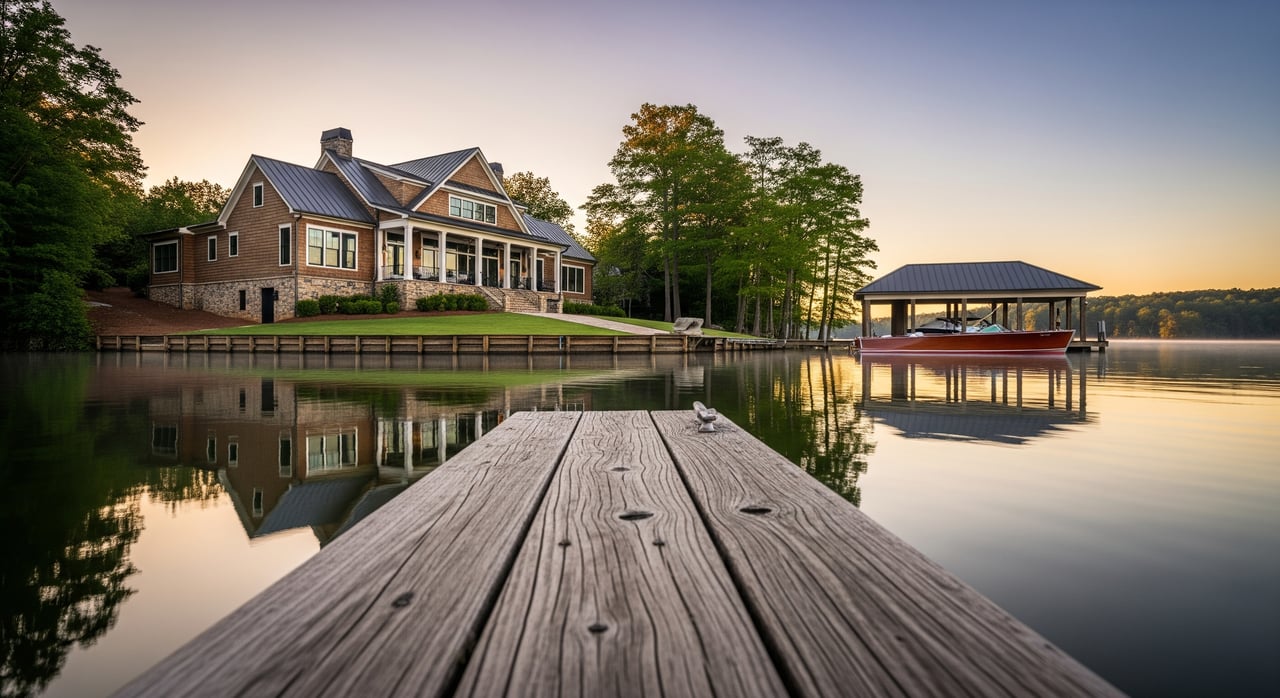
Dreaming of a custom home or small development on Lake Oconee, but unsure what it takes to make a lot truly build‑ready? You are not alone. A lake parcel can look perfect and still hide costly surprises if you skip a few key steps. This guide shows you how to evaluate lots in Eatonton and Putnam County with confidence, from utilities and septic to shoreline rules, access, and HOA approvals. Let’s dive in.
Start with records and contacts
Before you walk a lot, pull the right records and confirm who regulates what. This prevents false starts and protects your budget.
- Putnam County Building & Zoning and Planning: zoning district, setbacks, lot coverage, permits, and land disturbance.
- City of Eatonton Planning & Permitting: required only if the parcel sits inside city limits.
- Putnam County Health Department: septic feasibility, soil/site evaluations, and permits.
- Putnam County Public Works: road ownership, driveway and culvert permits, and private road standards.
- Putnam County Tax Assessor and Clerk of Superior Court: parcel data, recorded plats, deeds, and covenants.
- Georgia Power Shoreline Management Program: shoreline classification and dock approvals for Lake Oconee.
- U.S. Army Corps of Engineers and Georgia EPD: potential permits for wetlands, in‑water work, and land disturbance.
Pull these documents first
- Recorded deed and legal description
- Recorded plat or subdivision plat
- Title commitment or preliminary title report
- CC&Rs, bylaws, and architectural guidelines
- Any existing surveys and elevation certificates
- County zoning map and parcel’s zoning
- FEMA Flood Insurance Rate Map sheets
- Georgia Power shoreline classification or written guidance for that shoreline segment
- Utility availability letters or assessor utility notes
Utilities and on‑site infrastructure
Lake Oconee lots often require early utility verification. Assumptions here can derail timelines and budgets.
Water
- Determine if the parcel is on municipal water or will require a private well. Confirm with the City of Eatonton if inside city limits, or the applicable county water authority if outside.
- If public water is not at the lot line, get distance to the nearest main, meter extension costs, and any tap or frontage fees.
- For wells, plan for a licensed driller and confirm setbacks from septic systems and any testing requirements. In this region, iron and hardness are common water quality considerations.
Sewer and septic
- Many rural and near‑lake parcels use on‑site sewage systems. The Putnam County Health Department issues septic permits based on a soil/site evaluation.
- Schedule a soil evaluation early. If soils show shallow bedrock, high clay, or high water table, you may need an engineered system, which increases cost.
- If a sewer main is nearby, confirm connection costs, capacity, and homeowner or developer responsibilities.
Electricity and natural gas
- Georgia Power typically serves electricity around Lake Oconee. Ask about service line extensions, pole and transformer placement, and any easement impacts.
- Natural gas can be limited. Many owners choose propane. Verify availability and install requirements.
Internet and telecom
- Service levels vary by community. Confirm fiber, cable, DSL, or fixed wireless options and installation timelines. Some subdivisions phase utility buildout as lots sell.
Stormwater and land disturbance
- In Georgia, land‑disturbing activity over 1 acre generally requires a State NPDES Construction Stormwater permit with erosion and sediment controls. Expect engineered stormwater measures on sloped sites.
Physical site constraints
The ground conditions often matter more than frontage or views. A few early field checks can save weeks.
Topography and grading
- Order a current topographic survey to map slopes, setbacks, and a realistic buildable footprint.
- Steeper lots tend to need more complex foundations, retaining walls, and stormwater solutions. Factor cut/fill into your budget.
Soils and geotechnical
- Putnam County’s Piedmont clays have moderate to high shrink‑swell potential that influences foundation design and driveway subgrades.
- For custom homes or sloped lots, a geotechnical report with borings is a smart early investment.
- For septic, the county soil/site evaluation is essential to confirm system type and location.
Tree cover and tree protection
- Mature hardwoods and pines are common. Tree preservation can shape your building footprint and Architectural Review Board approvals.
- Check for any local or HOA tree rules. A certified arborist can identify specimen trees and protection zones.
Wetlands and buffers
- Low‑lying shorelines may include wetlands that limit grading or tree removal. A wetlands delineation by a qualified consultant can identify regulated areas and permitting needs.
Floodplain and FEMA maps
- Review FEMA Flood Insurance Rate Maps for flood zone designation. If in a mapped flood zone, foundations may require elevation and you may need flood insurance.
Shoreline and dock eligibility
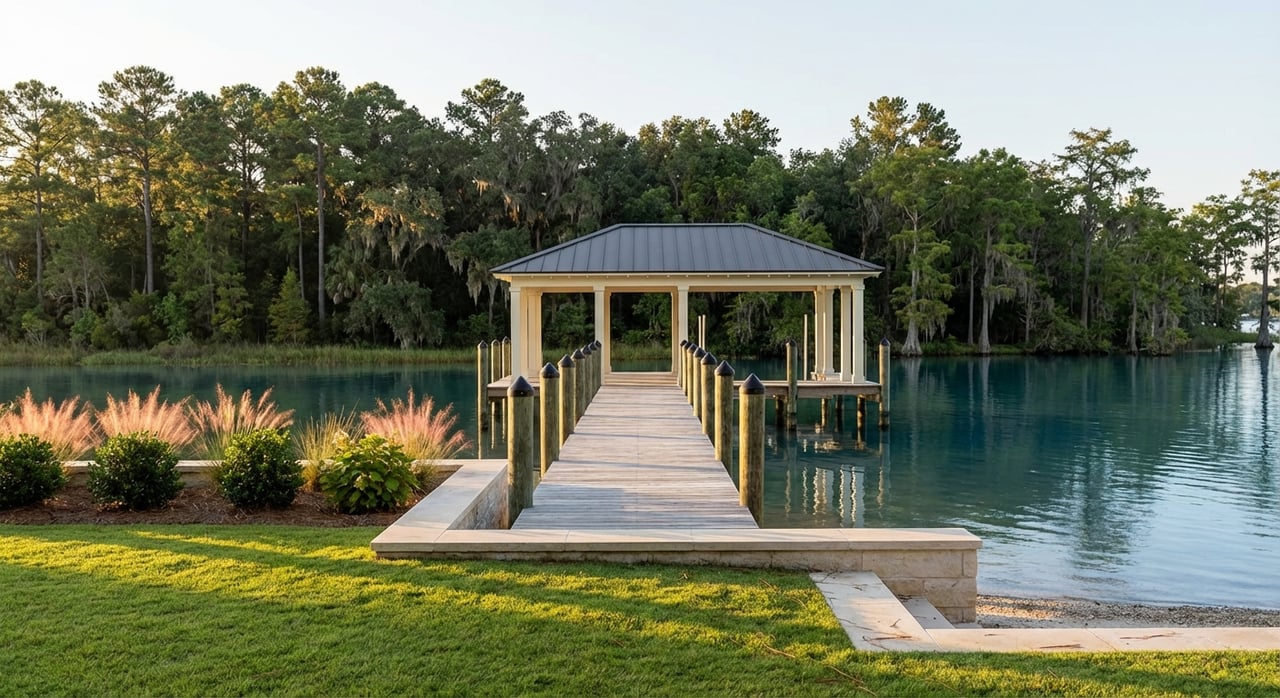
Lake Oconee shoreline is managed by Georgia Power under a Shoreline Management Program. Private docks and boathouses typically require Georgia Power approval, and some projects may also trigger U.S. Army Corps or county permits.
What determines dock eligibility
- Riparian rights: Verify your deed includes the rights to place a dock or that a permanent easement exists. Do not assume.
- Shoreline classification: Georgia Power classifications set dock type, dimensions, and spacing.
- Water depth and lakebed: Depth, mud or rock conditions, and nearby docks influence design and anchoring.
- Environmental constraints: Wetlands, vegetation, and navigation channels can limit placement.
Approvals and timelines
- Expect a Georgia Power permit for most docks and boathouses. You will likely submit plans, a site sketch, and dimensions, followed by a site visit.
- The review timeline is often 4 to 12 weeks from a complete submittal. Complex sites can take longer.
- Confirm any HOA rules that further limit roof styles, covered slips, or materials before you finalize plans.
Access, easements, title, and HOA controls
Even beautiful lots can fall short if access or title is unclear. Confirm these items early.
Road access and driveways
- Verify legal access to a public right‑of‑way or a recorded access easement. Private roads may have maintenance agreements or standards that affect permits.
- Putnam County or GDOT may require driveway and culvert permits, and emergency access standards can apply before building permits are issued.
Easements and encumbrances
- Order a current title commitment and an ALTA/NSPS survey to map utility, drainage, conservation, and access easements that reduce buildable area.
- Expect typical easements near lakes, such as power line and drainage corridors.
HOA, POA, and architectural review
- Many Lake Oconee communities have CC&Rs and an Architectural Review Board. Secure current guidelines, application forms, fee schedules, and timelines.
- Clarify restrictions on docks, exterior materials, roof pitch, impervious limits, driveway materials, fence rules, height, and tree removal.
- Ask about construction deposits, staging rules, dumpster placement, and erosion control requirements.
A practical due diligence plan
Use this sequence to keep momentum and reduce risk.
Recommended sequence
- Pull title, plat, deed, CC&Rs, and easements.
- Confirm jurisdiction, zoning, setbacks, and coverage with Putnam County or the City of Eatonton.
- Request Georgia Power shoreline classification and discuss dock feasibility.
- Engage a surveyor for boundary and topographic mapping that includes shoreline and setbacks.
- Schedule a Putnam County Health Department soil/site evaluation for septic.
- Order a geotechnical report if slopes or unknown soils are present.
- Commission a wetlands delineation if low or saturated areas are suspected.
- Review FEMA flood maps and obtain an elevation certificate if needed.
- Obtain utility availability letters and extension estimates for water, sewer, power, and telecom.
- Contact the HOA or ARB for guidelines, applications, and calendar.
- Get dock permitting and construction estimates from local marine contractors.
- Secure title insurance and confirm endorsements for riparian rights if applicable.
Typical timelines
- Title and recorded documents: days to 1 week
- Zoning confirmation: days to 2 weeks
- Survey and topo: 2 to 6 weeks
- Septic soil/site evaluation: 1 to 6 weeks
- Geotechnical report: 2 to 4 weeks
- Wetlands delineation and coordination: 4 to 12+ weeks
- Georgia Power dock approval: often 4 to 12 weeks
- HOA architectural review: commonly 2 to 8 weeks
- County construction permits: 2 to 8 weeks
Budget ranges to plan
- Boundary/topo survey: $1,000 to $5,000
- Geotechnical: $1,500 to $6,000
- Septic design and permit: $1,200 to $6,000
- Wetlands delineation and coordination: $2,000 to $10,000
- Dock design, permits, and construction: from a few thousand to $30,000 to $100,000+ depending on size and features
- HOA application or escrow: $500 to $5,000
Key questions to ask
Use these prompts to get clear, written answers.
- Putnam County Planning and Zoning
- What zoning applies, and what are setbacks, height limits, and impervious coverage?
- Are there driveway or fire access requirements before building permits are issued?
- Putnam County Health Department
- What is the septic approval process for this parcel?
- Are there local soil logs or maps that indicate feasibility for a conventional system?
- Georgia Power Shoreline Management
- What is the shoreline classification for this lot, and which dock types and sizes are allowed?
- What is the application checklist, expected review time, and fee schedule?
- U.S. Army Corps of Engineers
- Does the planned shoreline or wetlands work require authorization, and what type?
- HOA or ARB
- Can you provide recorded CC&Rs, current guidelines, review schedule, and fees?
- Are there sample approved plans or checklists for docks and homes?
- Utilities
- What are the costs and timelines to extend service to the lot line, and are easements required?
Build your local team
A strong team keeps you on schedule and compliant.
- Local land surveyor for ALTA/Boundary and topographic work
- Licensed septic designer or soils scientist familiar with county procedures
- Geotechnical engineer for foundation recommendations on sloped or uncertain soils
- Wetlands or environmental consultant if low areas are present
- Civil engineer or site planner for grading, stormwater, and driveway design
- Architect or home designer experienced with local ARB standards
- Title professional or land use attorney for access or riparian rights questions
- Local marine contractor experienced with Georgia Power dock permitting
Pitfalls to avoid
Protect your investment by planning for these common issues.
- Assuming riparian rights: Some deeds exclude or limit them. Verify rights in title and survey.
- Underestimating septic: Clay or high water table can require engineered systems. Get soils data early and budget accordingly.
- Utility extension surprises: Long runs from mains are expensive. Request estimates before you commit.
- HOA or ARB delays: Strict or unique guidelines can change your design. Secure documents and align early.
- Dock restrictions: Shoreline classifications or adjacent uses may limit dock size or style. Consult Georgia Power before you finalize plans.
- Floodplain costs: Mapped zones can increase foundation height and insurance. Confirm maps and elevation.
Final thoughts
The best Lake Oconee builds start with disciplined due diligence. When you confirm utilities, soils, shoreline permissions, access, and HOA rules up front, you avoid redesigns, delays, and budget creep. If you want a process‑oriented partner to help you source lots, manage the steps above, and connect you with proven local specialists, reach out to Avis Dickey. We will help you secure the right lot and move from concept to closing with confidence.
FAQs
What should I check first when evaluating a Lake Oconee lot?
- Start with recorded documents, zoning and setbacks, shoreline classification, and septic feasibility before you spend on design.
How long does a Georgia Power dock approval usually take?
- Many approvals take 4 to 12 weeks after a complete submittal, with longer timelines possible for complex sites.
Do most Putnam County lake lots require septic systems?
- Many rural and near‑lake parcels use on‑site septic, approved by the Putnam County Health Department after a soil/site evaluation.
When do I need an NPDES construction stormwater permit?
- Land‑disturbing activity over 1 acre typically requires a state NPDES permit with erosion and sediment controls.
What surveys are best before building near the shoreline?
- An ALTA/NSPS boundary survey plus a current topographic survey that captures setbacks and shoreline features is recommended.
Can HOA rules limit my dock or home design?
- Yes, many communities have ARB guidelines that regulate docks, exterior materials, roof pitches, impervious surfaces, and tree removal.